
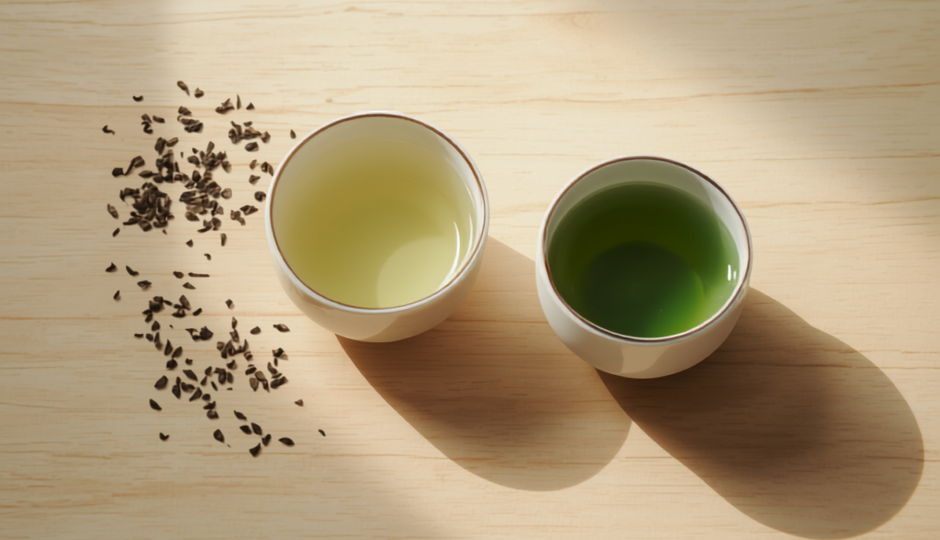
Sencha vs Gyokuro: What’s the Difference?
Quick Answer: Sencha is Japan’s most popular everyday green tea — bright, grassy, and brewed in full sunlight. Gyokuro is a rare shade-grown tea with a sweeter, umami-rich depth and a distinctive mellow character. Sencha is the natural starting point for most tea drinkers; gyokuro is what many people fall in love with once they’re ready to go deeper.
Walk into any tea house in Japan and you’ll find sencha front and centre. It’s the tea most Japanese households keep on hand. Ask a serious tea lover what they reach for when they want to slow down on a Sunday afternoon, and the answer is often gyokuro.
Both are Japanese green teas. Both come from the same plant, Camellia sinensis. Beyond that, they take quite different paths from field to cup — and those differences show up clearly in how they look, smell, and taste.
If you’re in Toronto, Oakville, or Vancouver and exploring Japanese green tea for the first time, here’s what you need to know.
What Is Sencha?
Sencha is Japan’s most widely consumed tea, accounting for roughly 80% of the country’s tea production. The leaves are grown in open fields under full sunlight, harvested in spring or summer, then steamed immediately after picking to halt oxidation and preserve the fresh green character.
That steaming step is what gives Japanese sencha its signature profile: a vivid green colour in the cup, a clean grassy or vegetal scent, and a flavour that balances brightness with a gentle astringency on the finish. It’s refreshing and straightforward — a tea you can drink multiple cups of without thinking too hard about it.
Sencha is brewed at moderate temperatures — around 70–80°C — for one to two minutes. Too hot, and it turns bitter. Done right, it’s clean and satisfying.
Quality varies considerably. Entry-level sencha is approachable and affordable. High-grade first-flush sencha from growing regions like Shizuoka or Uji can be genuinely complex, with a sweetness and depth that surprises people expecting something simple. You can buy Sencha tea in our store.
What Is Gyokuro?
Gyokuro (玉露, meaning “jewel dew”) is one of Japan’s most prized teas, and the shading technique is what sets it apart. About three to four weeks before harvest, the tea plants are covered to block direct sunlight — traditionally using woven straw, today more often with special shade cloth.
Deprived of full sun, the plants slow their growth and channel more energy into the leaves. Chlorophyll production increases, giving gyokuro its characteristically deep, vivid green colour. The shading also raises the concentration of L-theanine, an amino acid strongly linked to gyokuro’s sweetness and smooth, lingering umami quality.
After harvest, gyokuro leaves are steamed and processed similarly to sencha. But the weeks of shading change everything about what ends up in the cup.
Gyokuro is brewed at a much lower temperature than most teas — typically 50–60°C — with a short steep and a small amount of water. The result is a concentrated, rich liquid that looks like a deep jade. This is not the tea you gulp on your way out the door. It asks you to sit down.
Because gyokuro requires more labour, careful timing, and smaller yields than sencha, it carries a higher price. A good gyokuro is an investment.
How Do Sencha vs Gyokuro Taste?
The flavour difference between sencha and gyokuro is pronounced once you know what you’re looking for.
Sencha tastes bright and clean — fresh cut grass, a whisper of green apple, and a pleasant vegetal note. There’s usually some astringency on the finish, especially if the water runs a bit hot. It’s the kind of tea that wakes you up and feels restorative.
Gyokuro is something else entirely. The first sip tends to surprise people: instead of the bright, grassy character you might expect from a green tea, there’s sweetness, depth, and a savoury quality that tea people call umami. It lingers. The astringency that appears in sencha is largely absent. The finish is smooth, almost velvety.
If sencha is a clear summer morning, gyokuro is a quiet late afternoon with nowhere to be.
How to Brew Each Tea
Sencha
- Water temperature: 70–80°C
- Leaf amount: 2–3 grams per 150 ml
- Steep time: 60–90 seconds
- Infusions: 2–3
Gyokuro
- Water temperature: 50–60°C
- Leaf amount: 3–5 grams per 60–80 ml (small serving)
- Steep time: 60–90 seconds
- Infusions: 3–4 (gyokuro rewards multiple steeps)
With gyokuro, the small vessel and low temperature are both essential. The concentrated flavour from just a small pour of cool water is part of the experience. Many enthusiasts use a small Japanese kyusu or a gaiwan. Brewing it like a regular cup of tea — large mug, boiling water — produces something bitter and unpleasant. Treat it gently.
Which Should You Choose?
Choose sencha if you’re new to Japanese green tea, prefer brighter and crisper flavours, or want something you can drink every day without ceremony. It’s also the more affordable choice, and excellent quality is accessible without spending a lot.
Choose gyokuro if you already enjoy green tea and want to understand what the fuss is about, if sweet and savoury flavours appeal to you more than grassy brightness, or if you enjoy a slow and intentional tea ritual. It rewards attention.
Many people who try both end up keeping both. Sencha for weekday mornings, gyokuro for quiet weekend afternoons — that’s a very common arrangement among serious tea lovers.
Finding Quality Japanese Green Tea in Canada
Good Japanese green tea — genuinely good, not just adequately fresh — has historically required either specialty importers or a lot of guesswork at generic tea counters. That’s changed as a small number of Canadian tea sources have started curating directly for quality rather than just availability.
Fleur Palace Tea’s green tea collection includes carefully selected Japanese green teas chosen by a certified tea sommelier. Whether you’re in Oakville picking up a tin in person, ordering online from Toronto, or shopping from Montreal or British Columbia, the selection reflects genuine expertise rather than mass-market sourcing.
Not sure whether to start with sencha or gyokuro? A tea gift set featuring both is a practical way to taste the difference side by side — and it makes a thoughtful gift for anyone who’s curious about Japanese tea.
For brewing guidance specific to the teas you order, the brewing guide at Fleur Palace Tea covers temperatures, steeping times, and tips for getting the best from each style.
A note on caffeine: Both sencha and gyokuro contain caffeine, with gyokuro typically containing more due to the shading process increasing certain compounds in the leaf. The exact caffeine content varies depending on the harvest, preparation, and serving size.
Disclaimer: The information in this article is for general informational and educational purposes only. It is not intended as medical advice and should not be used to diagnose, treat, cure, or prevent any health condition. Always consult a qualified healthcare professional before making changes to your diet or wellness routine.