
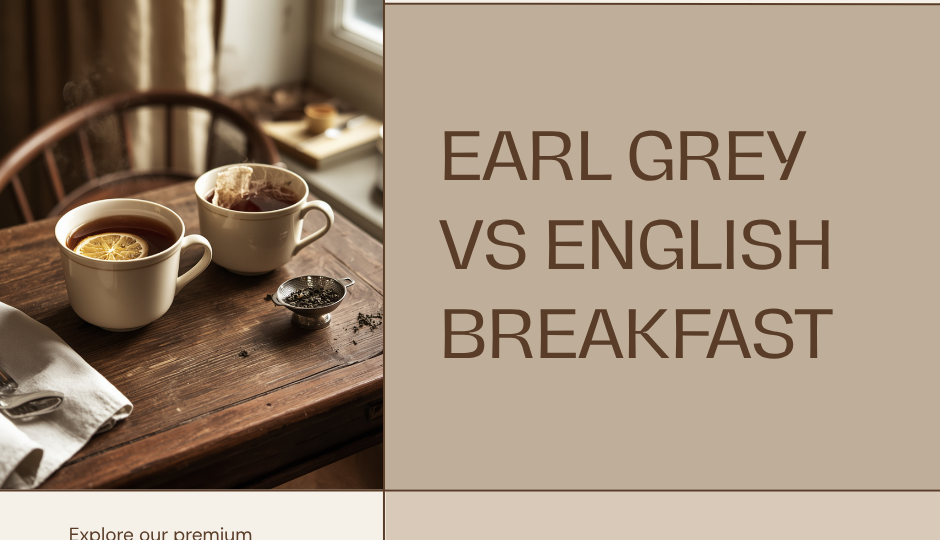
Earl Grey vs English Breakfast: Which Black Tea Should You Choose?
Two black teas. One question that comes up constantly at farmers’ markets, in our Oakville shop, and in the inbox: what’s actually the difference, and which one should I be drinking?
Both Earl Grey and English Breakfast are black tea staples found in kitchens across Canada — from Halifax to Vancouver — but they’re genuinely different in character, flavour, and purpose. Understanding what sets them apart makes choosing a lot easier, and honestly makes both teas more enjoyable once you know what you’re tasting.
Quick Answer: Earl Grey is a black tea scented with bergamot orange oil, giving it a distinctive floral, citrusy character. English Breakfast is an unflavoured blend — usually Assam, Ceylon, and sometimes Kenyan leaves — known for its bold, malty body. Choose Earl Grey for something aromatic and elegant; choose English Breakfast when you want a strong, grounding cup that holds up well to milk.
What Is Earl Grey?
Earl Grey takes its name from Charles Grey, British Prime Minister in the 1830s. The origin story of bergamot entering the blend has been told so many times it’s more folklore than history at this point — but the result is what matters. Black tea, scented with oil from the bergamot orange, a citrus fruit cultivated mainly in Calabria, Italy.
The flavour is unlike any other black tea. Floral, a little perfumed, with citrus brightness that lifts the cup without making it taste like juice. A well-made Earl Grey has real depth: the bergamot should be present but not dominant. If the tea smells more like cologne than citrus, there’s too much of it.
Our Organic Cream Earl Grey adds a smooth, slightly sweet creaminess that balances the bergamot beautifully — it’s one of the teas people come back for again and again. If you want to go further into floral territory, the Lavender Earl Grey layers dried lavender into the bergamot base for something genuinely distinctive.
What Is English Breakfast?
English Breakfast is a blend, and the formula varies between producers. The classic version draws from Assam (malty, full-bodied, slightly earthy), Ceylon (bright, medium-bodied, clean finish), and sometimes Kenyan tea (bold, with a coppery note). The goal is a cup strong enough to carry milk and sugar and still taste like tea.
There are no added flavourings here. The character comes entirely from the leaf selection and how the blend is proportioned. A good English Breakfast has that satisfying “tea-ness” — a little astringency, warmth, a clean finish. It’s the kind of tea that makes cold mornings feel more manageable.
Our Organic English Breakfast is certified organic, whole-leaf loose tea — and the difference from a standard supermarket tea bag is more noticeable here than almost anywhere else in the black tea world. It’s the first tea we recommend to people just starting with loose leaf who want something familiar.
How They Taste — and How to Brew Each
The clearest way to understand the difference is aroma versus body. Earl Grey is driven by aroma — the bergamot leads, and the tea underneath plays a supporting role. English Breakfast is about body and strength — what you experience first is the weight and warmth of the cup.
Brewing Earl Grey: Use water just below a full boil — around 95°C. Steep for 2 to 3 minutes. Going longer risks turning the bergamot sharp and bitter. Drink it plain or with a small splash of milk; too much dairy mutes the floral notes. One rounded teaspoon per cup is plenty.
Brewing English Breakfast: Full boil, 100°C. Steep 3 to 5 minutes depending on how strong you want it. It’s built for milk and sugar if that’s your preference — the blend holds its ground. Two teaspoons per 250ml gives a proper breakfast-strength cup.
For a deeper look at technique, our brewing guide covers water temperature, steeping times, and equipment across all tea types.
Earl Grey vs English Breakfast: Which One Is Right for You?
It comes down to what you want from a cup of tea and when you’re drinking it.
Earl Grey tends to suit: afternoon brewing, people who enjoy aromatic or floral flavours, those who prefer a lighter-bodied cup, and anyone who drinks their tea black or with minimal milk.
English Breakfast tends to suit: mornings, people who drink tea with milk, those new to loose leaf who want a starting point they already know, and anyone who wants a tea that delivers warmth and body before the day begins.
That said, most people who spend any time with loose leaf tea end up keeping both. They serve different moments. In Toronto and the GTA we see a lot of customers who started on English Breakfast and worked their way toward Earl Grey as their palate opened up. In Montreal and across British Columbia there’s been a shift toward more aromatic teas in recent years. Taste is personal, regional, and changes over time — neither choice is wrong.
Where to Find High-Quality Versions in Canada
Both teas are easy to find, but most of what’s on supermarket shelves is made from fannings — the dust and broken leaf at the bottom of the processing barrel. It brews fast and dark but lacks the complexity, aroma, and clean finish of a whole-leaf loose tea.
For Earl Grey especially, the quality difference is hard to overstate. The bergamot oil in a good loose leaf version is still vibrant and fresh in a way that tea bags simply can’t replicate. For English Breakfast, whole leaf means a fuller, smoother cup with none of the flatness that comes from over-processed leaf.
Both are available at Fleur Palace Tea — organic, whole-leaf, with delivery across Canada including Toronto, Oakville, Vancouver, Montreal, and beyond. Browse the full black tea collection to find what suits you.